Measure a plot before you trust it
Print a drawing that has a known dimension, lay a scale rule on it and compare. A mismatch might sit in the driver settings, the media advance or the calibration, and each has its own cure. Any office that issues drawings for approval should make this a routine.
After any repair that touches the feed or the carriage, we run the same check and tell you the result, so you can keep a note. Our job stays open until a line drawn at one metre measures one metre.

Where the plotters work in Brisbane
Engineering, surveying, architecture, town planning and construction consulting are big business here, and much of it clusters in the CBD, Fortitude Valley, Newstead, Milton and Toowong. Civil firms, builders and trade suppliers on the industrial side, around Rocklea, Acacia Ridge and Eagle Farm, and across Logan and Ipswich, keep plotters next to the estimators.
The settings differ from site to site and the pressure is the same. A drawing has to come out right, and when a tender closes nobody can afford a dead plotter.
What goes wrong
Most calls begin with one of these.
- Banding, or colours that shift across a print.
- Printhead and ink system errors.
- Roll feed and cutter faults.
- Media that skews or wanders to one side.
- A plot that comes out blank, or quits halfway through a drawing.
Reading a fault from the sheet
The paper shows the trouble before anything else does. Pale stripes across a sheet. An A1 print that is crisp down one edge and soft down the other. Colours at odds with the screen. A sheet cut shorter than the file said. Each belongs to a different part of the machine, and several faults can look alike.
When you ring, hold a bad plot up and describe it. A photo sent with the model is even better, because it lets us say what we expect to find before anybody leaves the depot.
Banding, stripes and blocked nozzles
Banding is the most common complaint, and it nearly always comes down to the heads or the ink getting to them. A single weak nozzle leaves a faint line through a solid fill. Thick ink in a tube, or a clogged head, gives the same result. A head clean and a nozzle check cost little and come first. When the stripes return, suspicion moves to the head, the ink path or the maintenance parts.
Warmth matters. A plotter in a hot room, or one left idle through a long weekend, clogs more readily, and a machine that sits for days is helped by a test sheet once a week.
Humid summers, dusty sites and wide format media
Roll media reacts to its surroundings. Paper that has soaked up a Brisbane summer cockles, wanders to one side and cuts unevenly. Film and tracing paper behave differently from bond, and a roll left on a site office floor collects dust and grit that scratches a platen.
Most of the cure is housekeeping. Keep rolls wrapped until loading, store them upright or on a rack off the floor, and trim the end of a roll that has sat open. If the paper still skews, the technician checks the media path and the sensors that follow the roll edge.
Media feed, rollers and the cutter
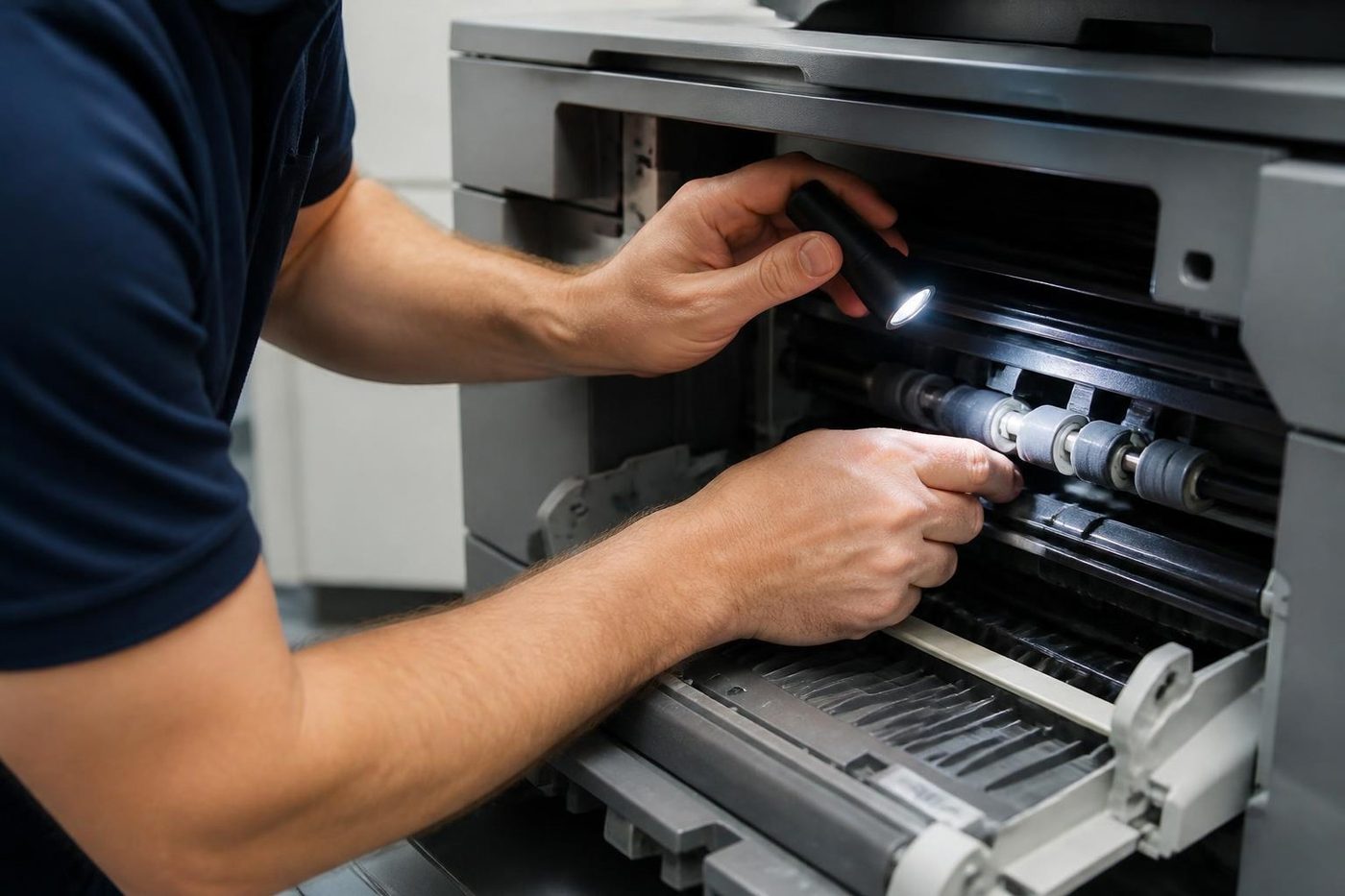
A roll fed plotter pulls paper through in tiny steps. Once the media drifts, skews or cockles, the drawing distorts, and you will not see it until a scaled print is measured. We look over the roll, the media sensor and the rollers, and ask what media you run.
When a cutter slices short or in the wrong place, we check three things: whether the sensor is reading the roll edge properly, how worn the blade is, and what roll width the driver thinks is loaded.
Calibrating after the repair
After a head, belt or feed roller has been replaced, the machine has to be aligned and the paper advance calibrated, or lines will not meet. We do this in the same visit and prove it with a scaled test drawing on your own media.
Machines that sit idle
Heads and ink systems resent a long stand. A plotter switched off for weeks can come back with blocked nozzles, because the ink thickens and dries in the head. Some machines run a maintenance routine at start up, and others need a clean by hand.
If you know one will sit idle, tell us beforehand. Often the best advice is to switch on briefly and print a test now and then to keep the heads wet. When one returns from a quiet spell banded, say how long it sat and what it last printed, and we offer our best reading of the cause.
Drivers, PDF settings and the print path
Some of the trouble is software. A drawing arriving at the wrong size, a job that stalls, or colour that fights the screen may trace to a driver, a PDF setting or a print server. The route from file to head gets followed end to end, and if the cause is not the machine we tell you so.
Posters, signage and presentation boards
Some offices put a plotter to work on display posters and boards. The hardware is the same, but the faults look different: a streak through a solid colour area stands out on a poster and vanishes on a line drawing. Tell us what the plotter is used for and what the fault looks like on a poster, so the right part is on the van.
Moving a plotter between floors or offices
A plotter is long, heavy and full of delicate parts. A move means securing the carriage, protecting the heads and the ink system and packing it so it does not flex. One that arrives with a knocked carriage or a leaking ink line has become a repair.
If you are relocating, ring beforehand with the make and model. We prepare it, move it and reinstall it, then recalibrate and test, so the first plot at the new site is a good one.
Plotter makes in Brisbane drawing offices
Three names dominate the wide format calls we get: HP DesignJet, Canon imagePROGRAF and Epson SureColor. Some are a small desk side unit in a four person practice, others a big roll fed machine that churns out drawing sets every afternoon in an engineering firm. We are an independent business with no authorisation from any maker.
Three facts help us at the start: the exact model, the roll width, and whether the plotter prints for one desktop or for a server the whole office shares.
One plotter visit from start to finish
A typical job runs like this.
| Step | What happens |
|---|---|
| 1. The call | You tell us the model and roll width and describe the drawing, and we talk through the price while you are on the line |
| 2. The visit | A trained, certified technician comes to your premises. Plotters are heavy and fragile, so nothing goes in the post |
| 3. The check | The heads, ink path, media and rollers are inspected and we explain what we find |
| 4. The proof | Once repaired, the plotter is calibrated and tested with a scaled drawing on your media |
| 5. Afterwards | If the same fault returns we fix it again free. Same day service is available |
Mend or replace
A plotter with a bad printhead is sometimes worth fixing and sometimes not, and it comes down to the machine's age and what the head costs. Wide format machines last, and many offices own plotters that have outlived two or three computers. There comes a point when a head or main board costs more than the machine is worth, or parts get hard to find. We say so plainly and lay out the options.
A replacement can be bought, leased or hired through our sales pages, and the old plotter can be moved or collected by our removal and movers service. Repair advice stays separate from any talk of a new machine.
Skilled hands matter
Heads, carriage belts and encoder strips are delicate. Clumsy handling can scratch a strip, kink a tube or knock a head out of line, and the plotter ends up worse than it started. So the person who attends is a trained, experienced and certified technician, and 98% of jobs are finished in one visit.
Before you ring about a plotter
Ring even if one of these is missing.
- The make and the exact model.
- Roll width and the media you load.
- A bad plot, or a photo of one, and a note of how it should have looked.
- Any message on the screen, word for word.
- Where it sits: the building, the floor, any access rules, and the lift if the plotter is upstairs.
If every line is engaged, the call is logged and we ring back.
A tender goes out at five
Drawing offices live by deadlines, and the plotter is the last machine in the chain. The sensible habit is to print a scaled test sheet the day before a big submission, check it against a rule and look at it under good light. A fault found on Tuesday afternoon is a routine visit. A fault found at four o'clock on the day is an emergency, and we will still say what is possible, but the earlier call is easier for everyone.
Roll widths, A1, A0 and the media in the drawer
Most Brisbane practices run A1 or A0 roll machines, and the roll width decides which parts and settings apply. A driver set for a 914 mm roll on a machine loaded with a 610 mm roll produces cut errors and shifted prints that look like hardware faults. A machine with media of mixed types in the drawer is another source of confusion.
When you ring, give us the roll width and the media type. We confirm both on the machine when we arrive, and we write them in the notes for the next visit.
Inks, tanks and cartridges
Wide format machines run on cartridges or on larger tanks, and each fails differently. A plot can stop halfway for several reasons: a cartridge sitting badly, a chip the machine fails to read, an air bubble in an ink line. Tanks and supply lines add checks of their own, particularly after a move or a long idle spell.
Genuine and compatible inks behave differently, and some machines complain about the second kind. We report what the machine says, leave you to take it up with your supplier, and take no side on which you buy.
The carriage, the encoder strip and a clean line
The print carriage runs back and forth along a rail, and a thin encoder strip tells the machine where it is. If the strip collects ink mist or dust, the carriage loses its position, and lines drift or double. A scratched or kinked strip needs replacing, and a rough hand with a cloth is how it gets scratched.
We clean the strip with the right material, in the right direction and only when the evidence points there. Dust on a strip in a site office is common. Cleaning the wrong way is how a minor fault becomes a repair.
Colour that does not match the screen
A plot that disagrees with the screen can come from a profile, a driver setting, a media type that does not match the paper, or a head that has drifted. Offices that print presentation boards and site photographs notice it first. We compare the media type in the driver with the paper loaded, then the head alignment, and only then the profile.
If the office runs a colour managed workflow we leave those settings alone and tell your design team what we saw. Colour is shared, and nobody gains from a technician changing something three people rely on.
Site offices and the dust problem
A plotter in a shed or a demountable on a building site gets dust, vibration and sometimes a generator for power. Dust settles on the encoder strip and the platen. Vibration loosens connectors. A poor supply can cause strange restarts that look like board faults. Rolls kept on the floor pick up grit.
We do not expect a site office to look like a studio, and the advice is practical: a small cover for the machine overnight, a rack for rolls, a protected power board and a visit before a big plot set goes out.
Your plotter, from the van doors to the last test page


A trader sees the whole life
We know which models soldier on
Because we buy and sell machines we know which models run for years and which turn up on every second job sheet. That knowledge goes into repair advice as well.
The work is warranted, and so is any machine we sell.
- Repair options first. Replacement second.
- Plain about age. No upsell on a machine with years left.
- Warranted either way. Repair or replacement.
Keep reading around Brisbane
 HP repairsLaserJet, Color LaserJet, Managed MFP and DesignJet, repaired where they sit.
 Epson repairsWorkForce Pro, WorkForce Enterprise and SureColor T series, repaired on site.Commercial printer repairsWorkgroup and desktop laser printers, colour lasers and label printers, repaired at your premises.
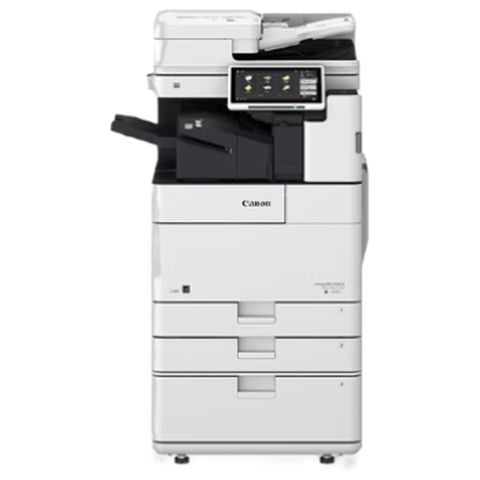 Canon repairsimageRUNNER ADVANCE, DX and imagePRESS, on site.
 Brisbane CBDQueen Street to Eagle Street, William Street to Roma Street
 Fortitude Valley and NewsteadFortitude Valley, Newstead, Teneriffe, New Farm and Bowen Hills studios and offices.
 Relocation and setupCopier moves, installation and network setup, tested before we leave.
Buy, sell and lease
Buy, sell and lease commercial copiers in Brisbane
We also sell new and refurbished commercial copiers and buy used ones. Same team, same technicians.
Machines and offices we know
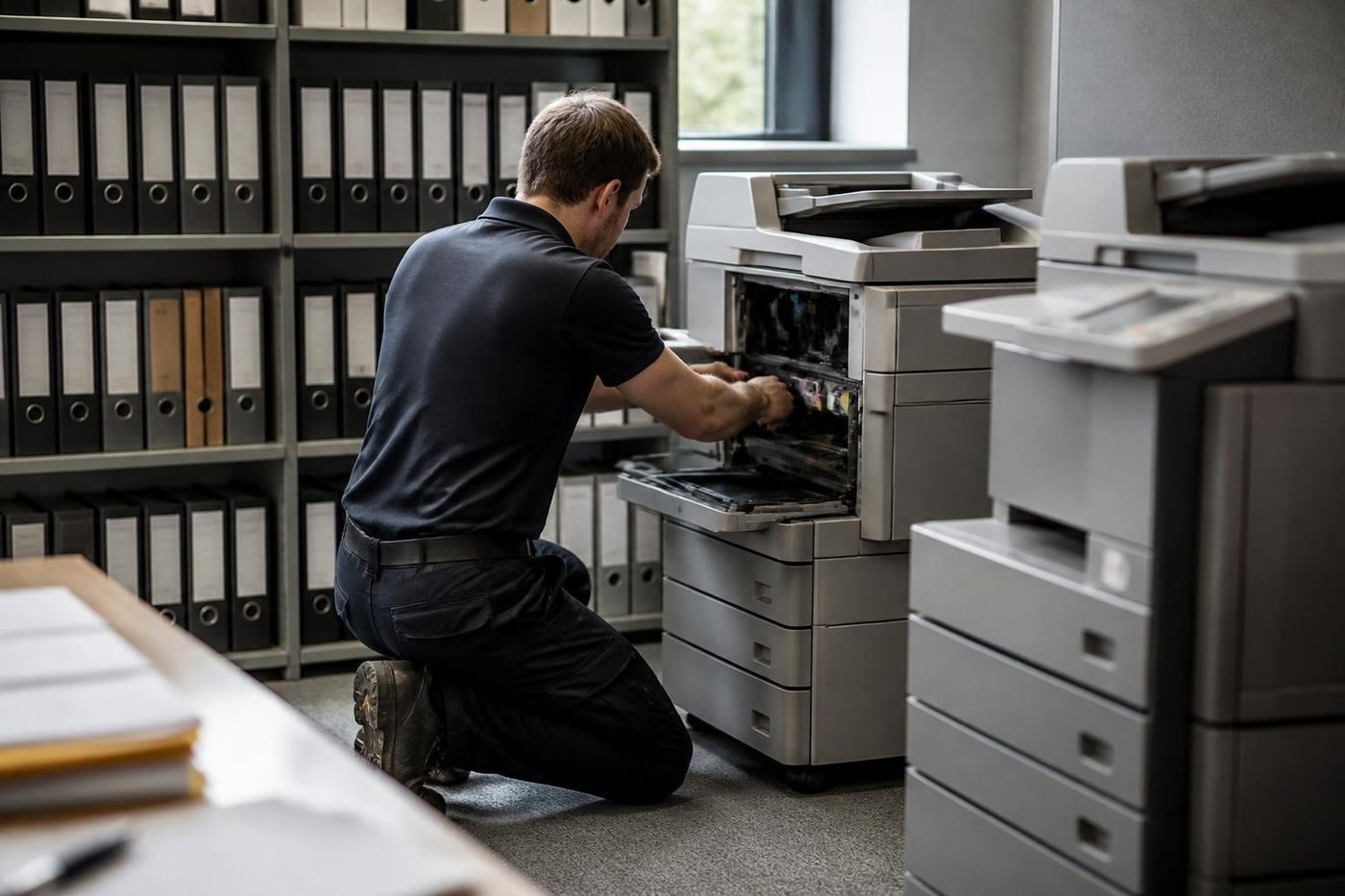
Questions people ask us on the phone
Which plotters do you service?
HP DesignJet, Canon imagePROGRAF and Epson SureColor technical printers, and other common wide format makes. Give us the model when you ring.
Do you repair a plotter at our office?
Yes. A plotter is heavy and fragile, so the repair is done where it stands and nothing is posted.
Why are there stripes across my plots?
The heads, or the ink feeding them, most often. We start with a head clean and a nozzle check. Stripes that come back send us deeper into the head, the ink path and the maintenance parts.
How do I check that my plots are to scale?
Print a drawing with a known dimension and lay a scale rule on it. Any difference points to the driver, the media advance or the calibration.
Our plotter sat idle over the holidays and now bands. Why?
Ink thickens and dries in the head over a long stand. Tell us how long it sat and what it last printed, and we give our reading of the cause.
Why does the paper skew or track to one side?
Roll paper that picked up damp air through a Brisbane summer is a common cause, so the roll gets checked first, then the media path and edge sensors.
The cutter cuts the sheet short. What is wrong?
The media sensor may be misreading the edge, the blade may be worn, or the driver may be set to another roll width.
Can you move a plotter to a new office?
Yes. The carriage is secured, the heads are protected, and the plotter is moved, reinstalled, recalibrated and tested.
Is my old plotter worth repairing?
Sometimes. Its age and the cost of the head settle it, and we answer plainly after seeing the machine.