The three questions a technician asks first
Where does it stop? How often? What did you change? Those three get us further than any code.
Where means the position in the path. Just after the tray points one way, in the middle another, at the exit another again. How often separates a bad day from a habit. What you changed covers the new paper, the humid week, the move of the machine against a wall, the person who started loading the bypass tray with labels.
Write down the answers before you ring. It is the quickest route to a price.
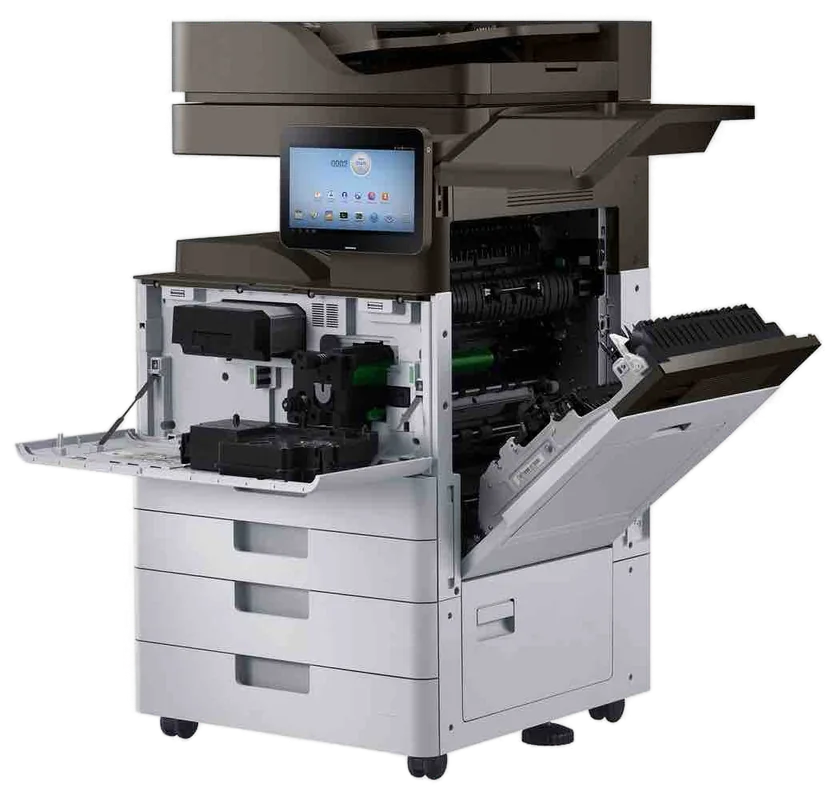
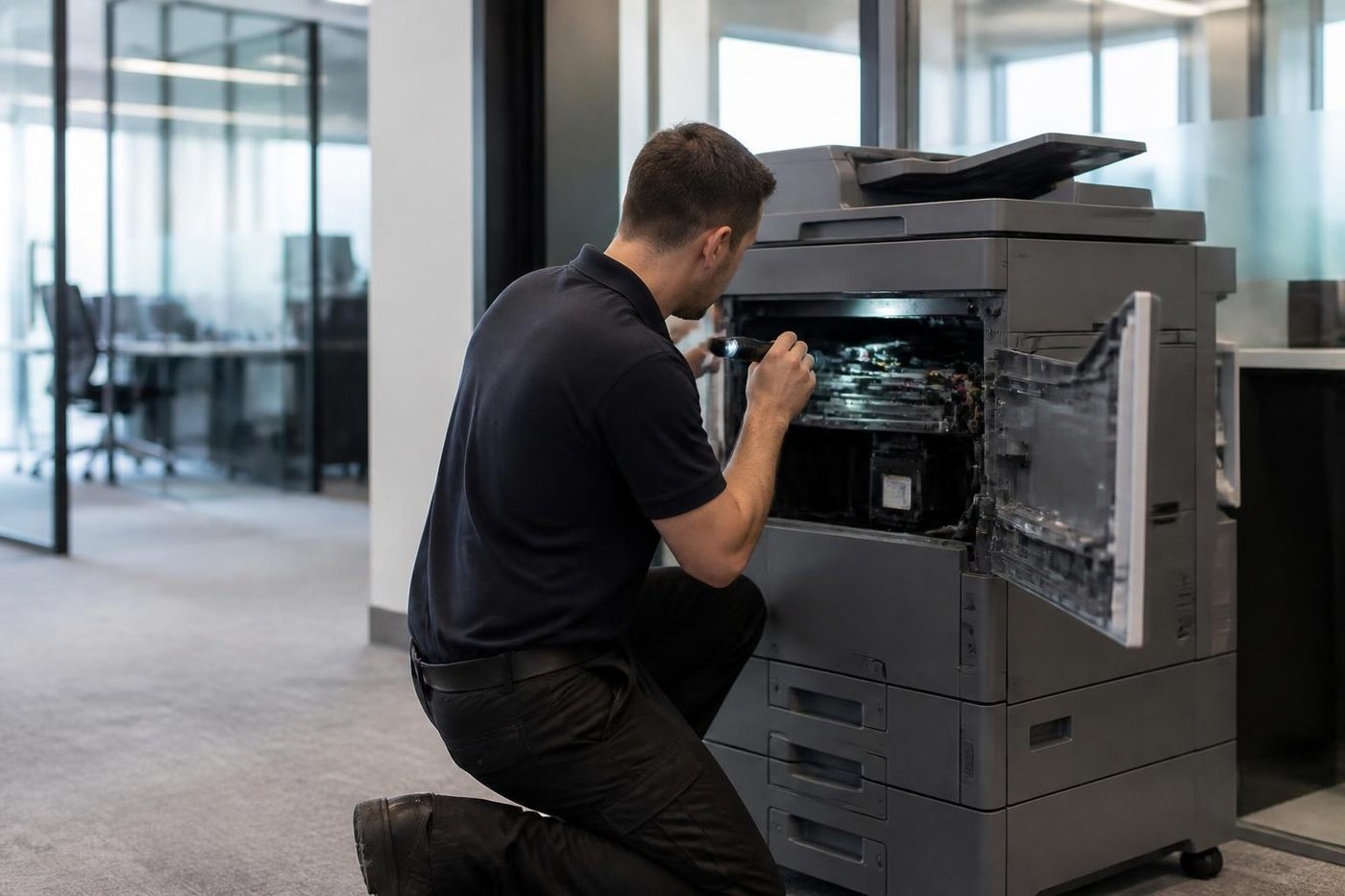
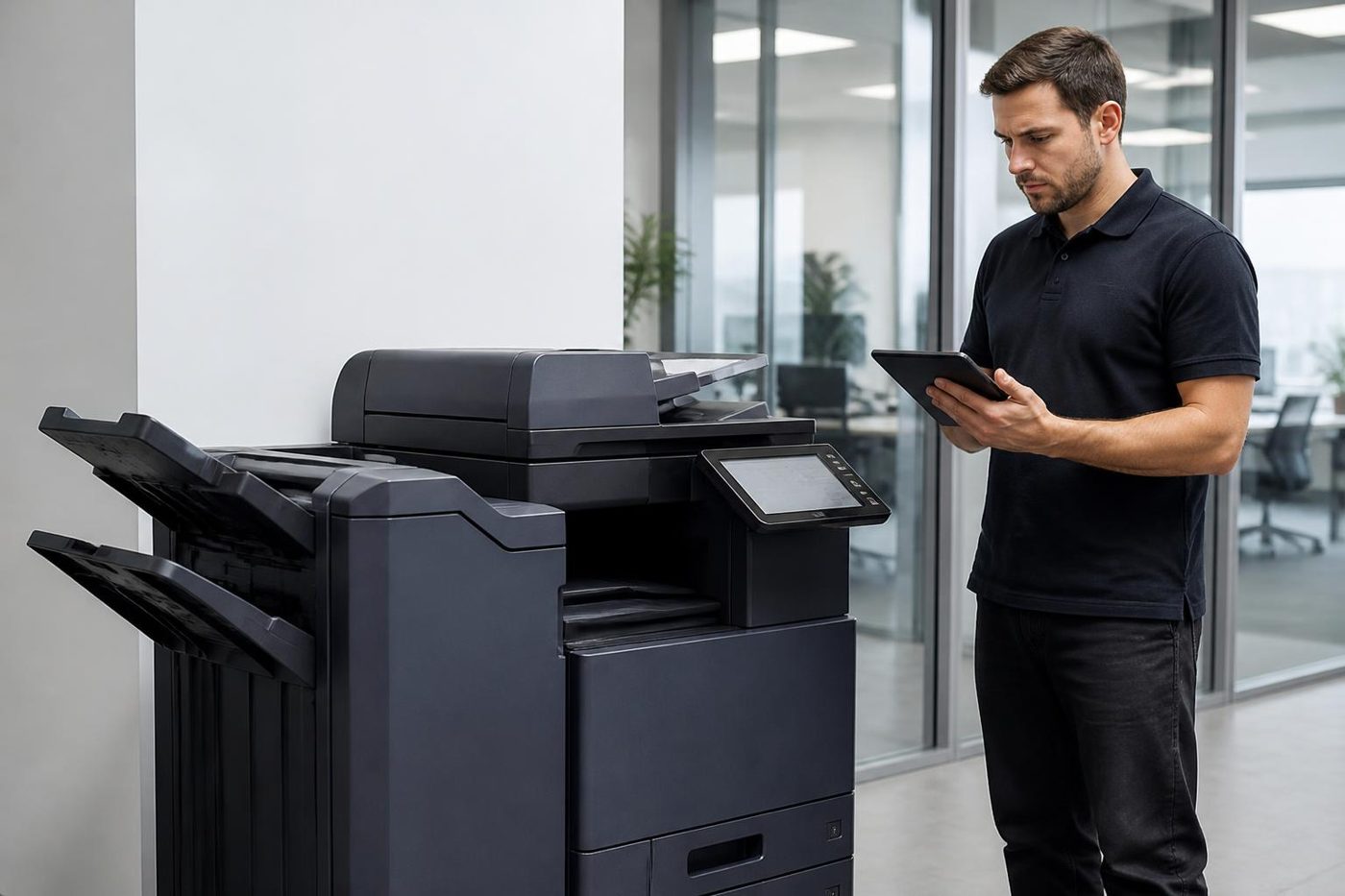
Where the sheet stops and what it tends to mean
Treat this as a rough map. Every model has its own path, and the machine has the final say.
| Symptom | Start looking at | Who deals with it |
|---|---|---|
| Pages leave the tray stuck together in twos and threes | Paper that has taken on damp or static, or a separation pad worn smooth | You look after the stock, we replace the pad |
| Paper gets no further than the mouth of the drawer | A feed or pickup roller that has glazed over or worn flat | We do |
| Sheet arrives crumpled halfway through | Registration area, a bent guide, or paper sitting skewed in the drawer | You set the guides, we handle the rest |
| Warm, crinkled paper at the output | Fuser or exit rollers | We do. Leave the covers shut and ring |
| Single sided prints fine, double sided jams | The duplex path, or curl left behind by the first pass | We do |
| Originals mangled by the document feeder | Staples, tape, dog eared corners, or a tired feeder pad | You prepare the originals, we change the pad |
| Labels or envelopes keep jamming | The wrong tray, or a paper type setting that does not match | You check the settings first |
Humidity does more than people allow
From November through to March Brisbane air is heavy, and paper takes it up at the edges. The sheets cling together and feed in pairs, or the stack curls and catches on a guide. A ream left in a cupboard beside an outside wall will do this inside a fortnight. An air conditioner switched off over a long weekend does it in days, which is why Tuesday morning jams are so common after a public holiday.
Leave each ream in its wrapper until the minute it goes into a drawer, and keep it lying flat. Do not tip a new ream on top of what is left of the old one, and keep one brand and weight to a drawer. None of it costs anything, and it removes a surprising share of jams.
Paper weight and the setting that disagrees with it
Offices change paper without telling the machine. The drawer is set for plain 80 gsm and somebody loads a heavier stock for a client report. The machine feeds it at the wrong speed and the fuser treats it as thin paper. The result is jams, curl, and toner that will not hold. If you change stock, change the paper type on the panel as well. It takes a few seconds.
Recycled paper is a separate matter. Some of it feeds beautifully and some of it sheds dust that coats the pickup rollers. If jams started the week a new recycled ream arrived, put the old stock back for a day and see.
What you can do yourself, with covers closed
Follow the panel diagram to handles marked for users, and no further.
- Read the display. Many machines show a diagram of where the sheet is.
- Pull the drawer out and look in the gap behind it for a corner of paper.
- Take out the old paper, square a fresh ream, load below the fill line and set the guides snug.
- Check that the size and type on the panel match what is in the drawer.
- Staples and paper clips come off before originals go in the feeder, and folded corners get smoothed out.
- Try the glass for one copy, then send a single page from a computer. When the glass copy is clean and only feeder jobs stick, you have narrowed it to the feeder.
If a page is stuck, draw it out gently the way it was heading and aim to get it out in one piece. A torn corner left behind becomes the next jam. Keep hands off the fuser, which stays hot long after power off, and do not force any cover the machine reports as open.
The jam message that will not go away
Occasionally the panel reports a jam and there is nothing to see. It might be a postage stamp sized scrap behind a roller, a sensor flag that has stuck, or a dirty sensor that reads a clear path as blocked. Every one of those lives behind covers users are not meant to open. Switching the machine off and on once can clear a one off glitch. If the message returns the same day, stop and ring us.
What a technician does with a jam
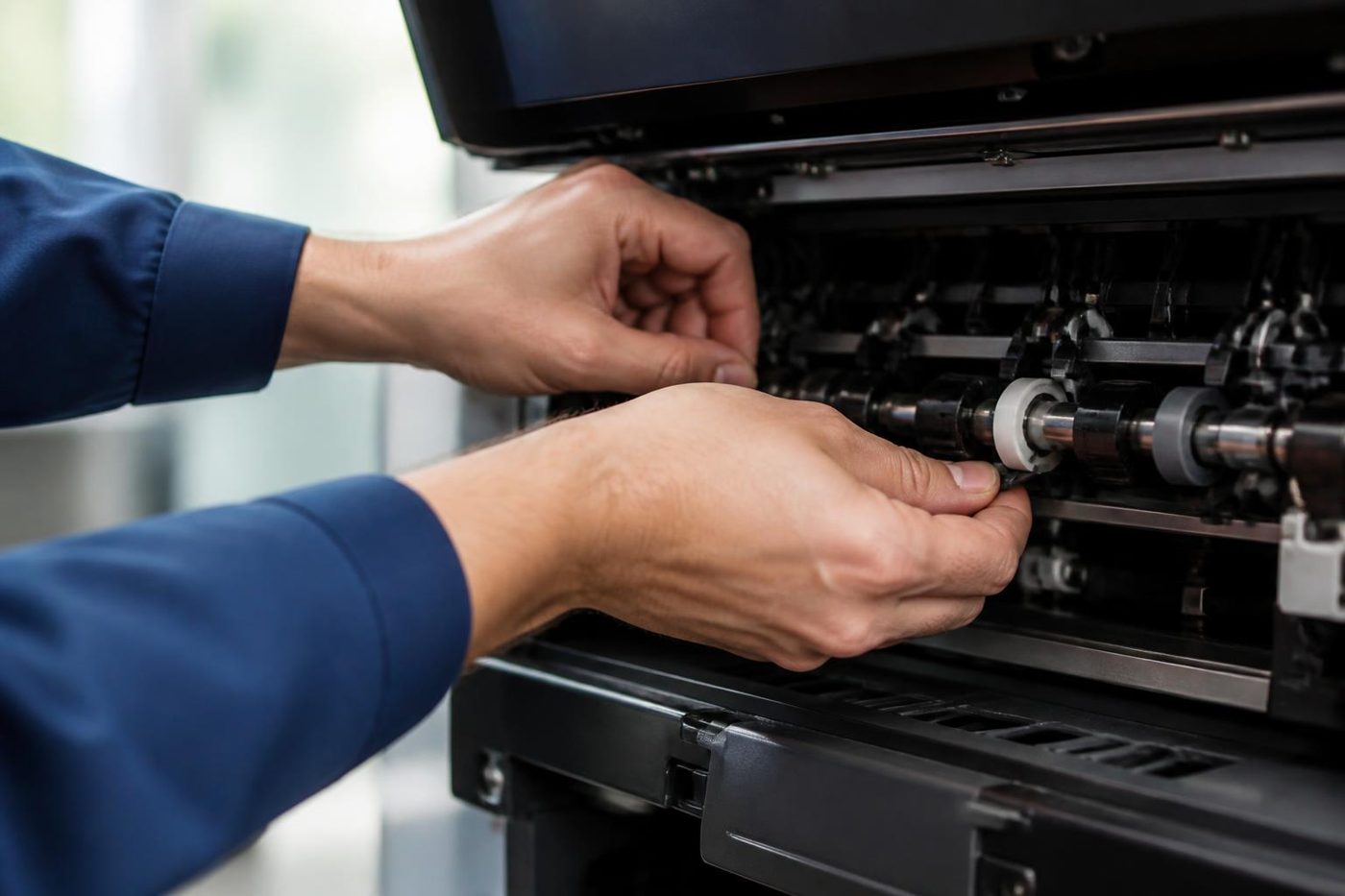
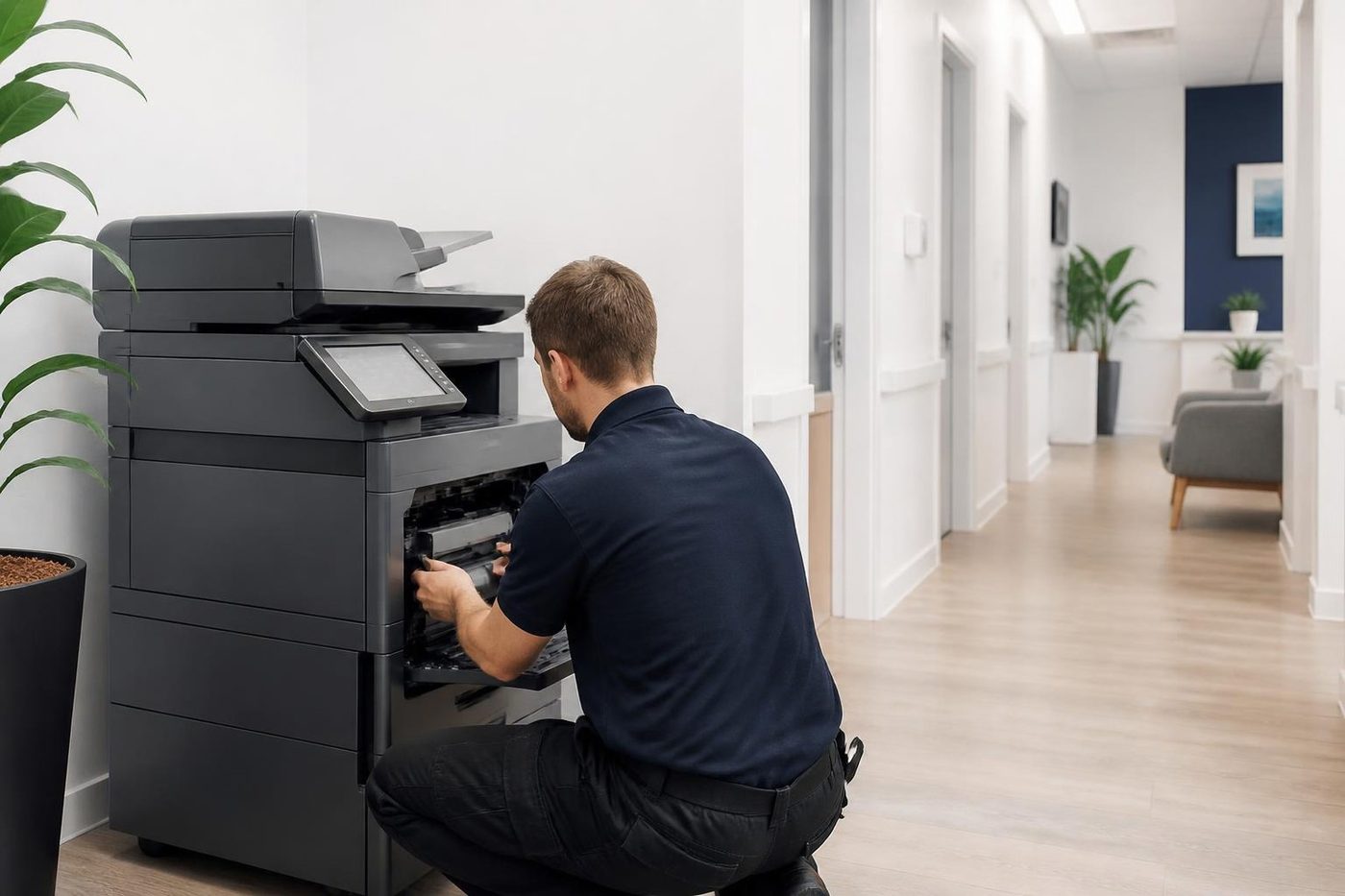
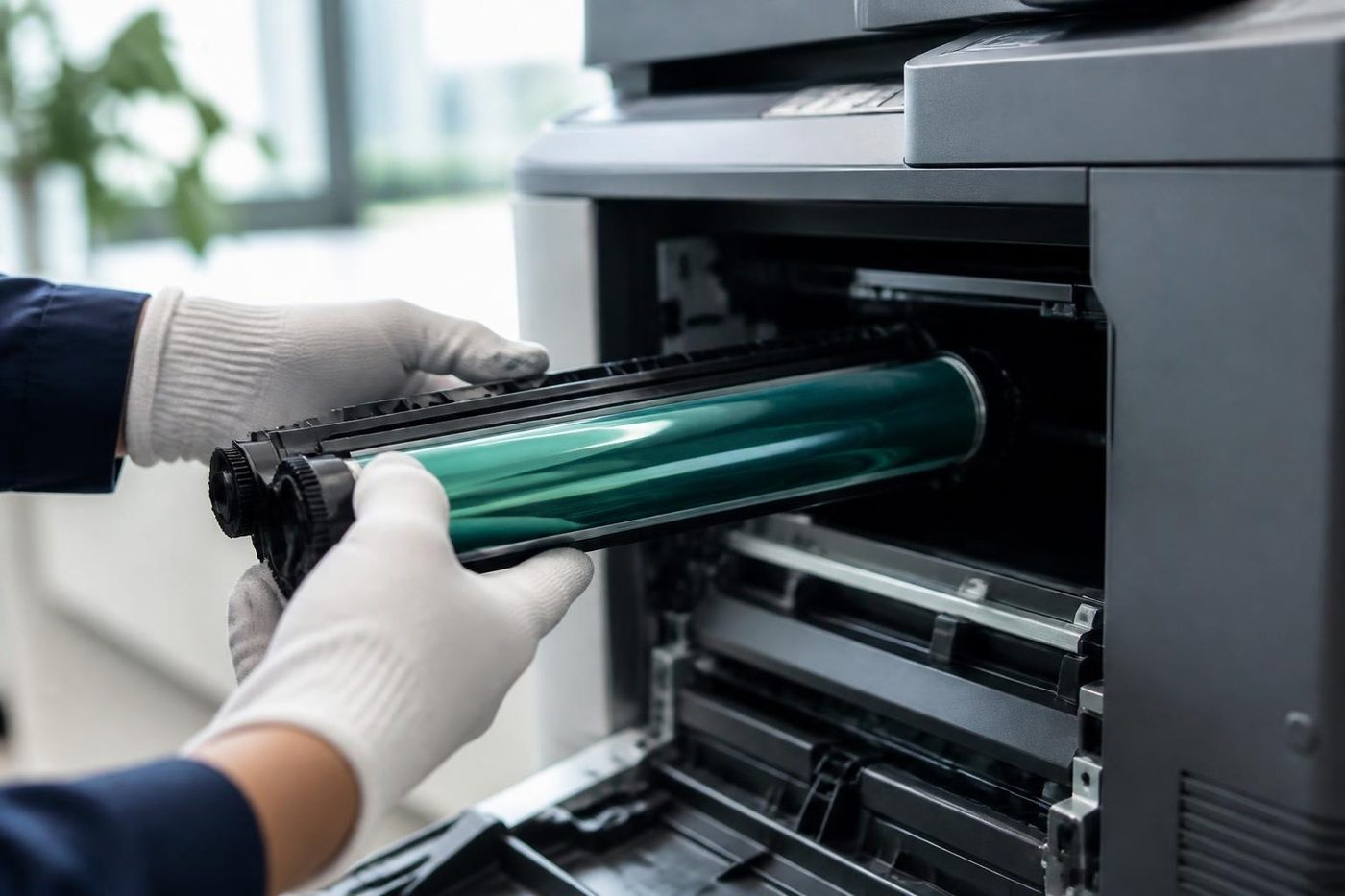
The first move is to feed paper through and see where it slows or skews. Then the path and sensors are cleaned with the right materials, and the pickup and feed rollers are checked for grip, since a roller can look perfect and still be glazed. Separation parts get a look too. A technician who has opened a lot of the same model knows which rollers go first. The drum and the fuser get respect, because one hates light and the other burns.
Guessing at a part costs the part plus a second visit. We send trained, experienced, certified technicians, and our first visit fixes 98% of repairs. If your jam returns after we have been, we deal with it again and do not charge.
Jams after the power drops
Storms drop the power with no warning. If it cuts out mid job, the page in the path stays there, and when the machine restarts the display may not show where it is. Work through the panel diagram carefully. Sometimes the sheet is partly in the fuser, in which case wait for it to cool before you touch it and, if you cannot see how to free it, ring.
Brisbane offices and their jams
Fine floor dust is the quiet culprit at warehouse and workshop offices around Acacia Ridge, Rocklea and Murarrie. It coats the rollers and sensors, and you only notice when pages start to slip. Older Queenslander conversions in Milton and Paddington can run damp in the wet months, with trays against outside walls suffering first. In a CBD tower the air is steady midweek, but power the air conditioning down for a long weekend and the paper is limp by Tuesday.
We can often get a technician out the same day. Give us the make, the model and the spot where the sheet stops, and we will talk through a price.
The second callout
Nobody budgets for the second visit
So we fuss about the first visit. The van carries the common spares, and the technician knows the model before knocking on the door. 98% of repairs finish first time.
The rest we tell you about at once, with what is needed.
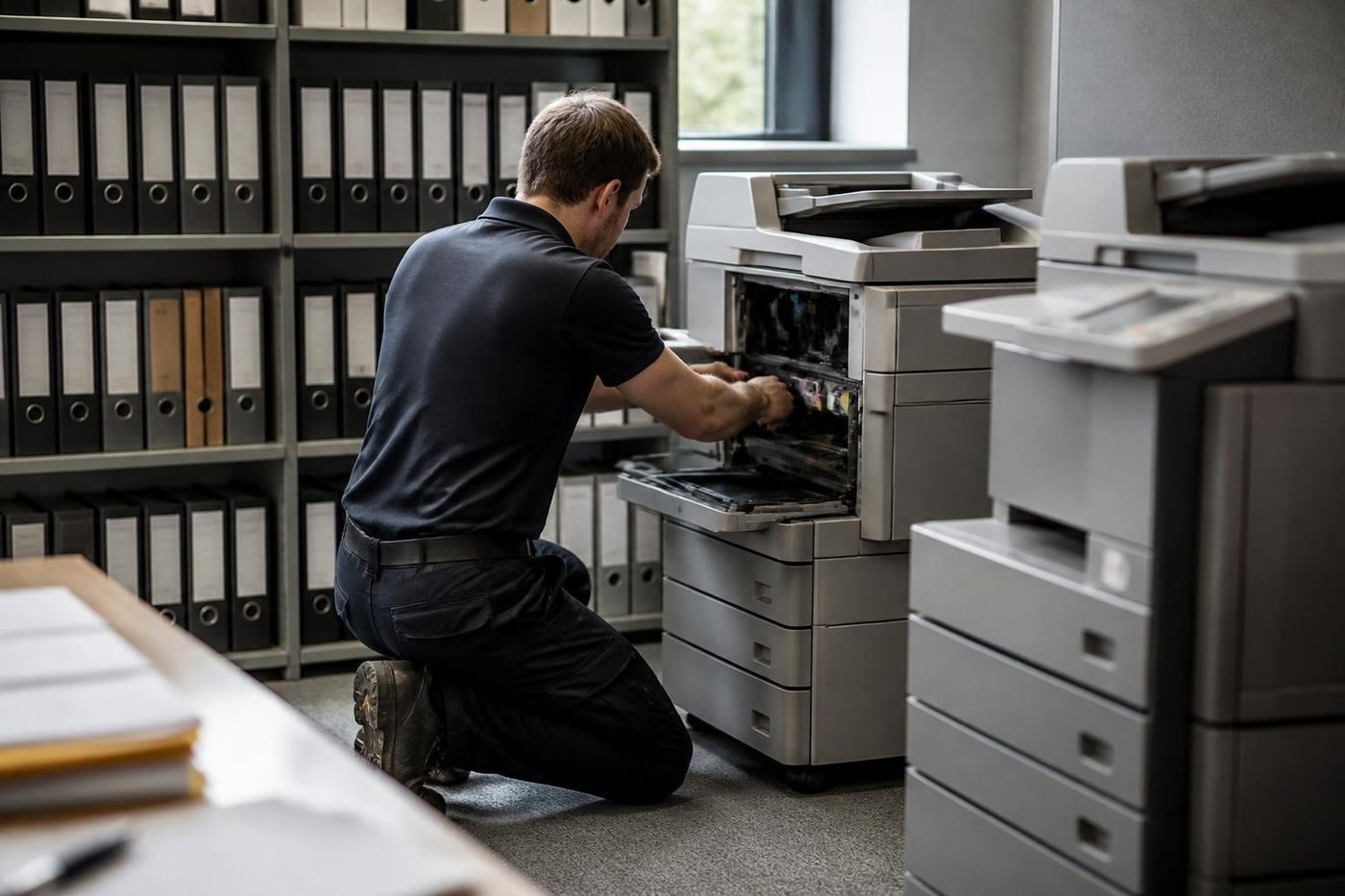
- Spares on board. Drums, fusers, pickup rollers, blades.
- Model known. The technician has opened one like it before.
- No second bill. If the same fault returns, we fix it again free.
Keep reading around Brisbane
Copier and printer faultsStart from the symptom, find the next step. Toner smearing and fuser faultsToner that rubs off, ghosting and fuser trouble.
 Copier noise, grinding and squealingWhat a grind, squeal or thump is telling you.
 Copier error codesHow to read a code and what to note down.
 Is my copier worth repairing?How we weigh repair against replacement, honestly.
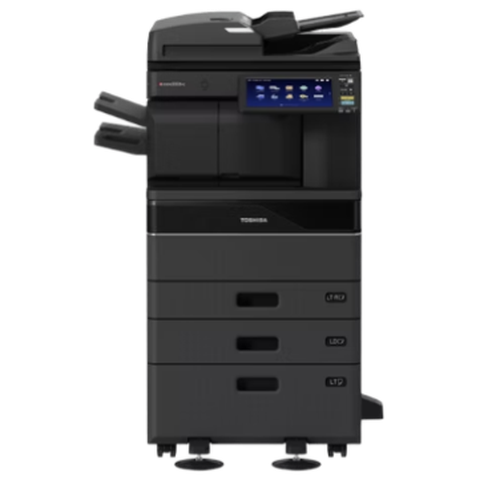 Toshiba repairse-STUDIO colour and mono copiers, fixed where they stand.
Buy, sell and lease
Buy, sell and lease commercial copiers in Brisbane
We also sell new and refurbished commercial copiers and buy used ones. Same team, same technicians.
Brisbane offices, up close


Questions people ask us on the phone
Why does it grab two sheets at once?
Paper that has gone damp or static clings at the edges, or the separation pad has worn smooth. Try a fresh sealed ream first. The model number tells us what else to suspect.
Is it all right to tug a stuck page free?
Only when the panel points to a user handle and the page is clearly visible. Draw it out slowly the way it was heading. Cannot see the sheet? Stop and ring, because fragments left behind start the next jam.
The panel insists there is a jam and I can see nothing. What now?
Usually a tiny scrap or a sensor flag that has stuck. Both live behind covers users should leave shut, so it becomes a technician job.
Why do only two sided jobs jam?
Two sided pages run through a return path with rollers of its own, and the first side often leaves the sheet curled. Either one is worth a technician's attention.
My document feeder chews originals but the tray feeds fine. Why?
The feeder has its own rollers and pad, separate from the tray. Staples, tape, creased corners and a worn pad are the usual culprits.
Does the Brisbane summer really matter?
It does. Paper soaks up moisture and curls. Keep reams sealed until needed and leave the air conditioner running over closures.
Will you replace the rollers where the machine stands?
We work at your premises. Before anything is fitted we tell you which roller is worn and what shows it.
How is the price worked out?
Parts plus time. We talk it through on the phone and nothing is booked until you agree.