What the job involves
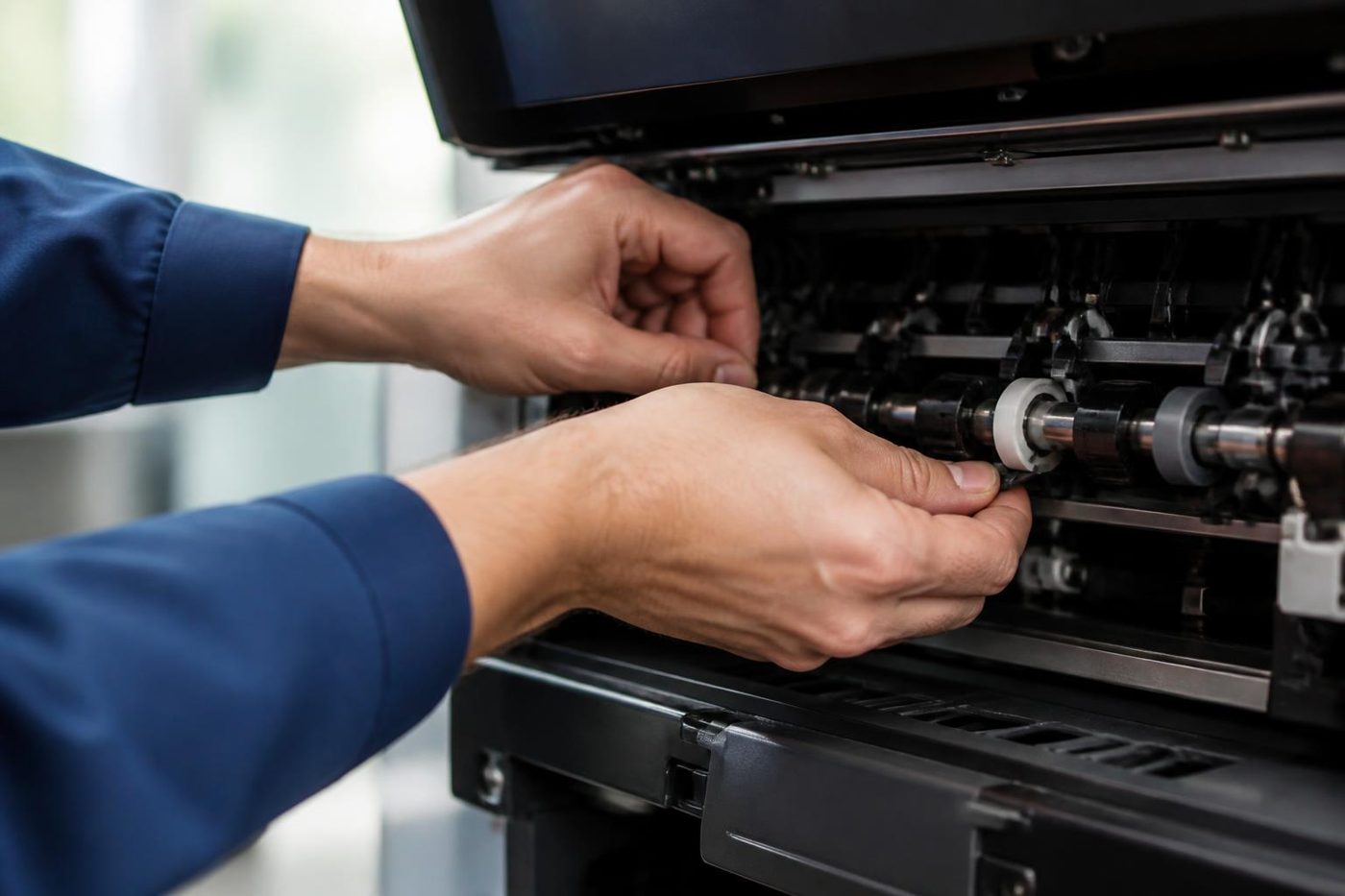
A technician diagnoses, repairs, adjusts and tests commercial printing machines, usually at the customer's premises. That sounds simple until you list what is inside one: a fuser hot enough to burn, a drum that light will damage, belts, clutches, sensors, a laser unit, a scanner and a controller that has to talk to your network. A good one reads the fault history, asks the right questions before leaving the depot, arrives with the parts the fault usually needs and explains the options in plain words.
Ours work on commercial copiers and printers every day, across Toshiba, HP, Kyocera, Fujifilm, Canon, Ricoh, Konica Minolta, Sharp and the other common makes. They carry the common spare parts, which is the main reason most repairs finish in one visit.
Why the right person saves money
The least costly visit is the one that fixes the machine once. A technician who has seen the same fault a hundred times names the cause in a few minutes, fits the right part first and does not bill you for guesses. One who has not may replace a fuser when the trouble was a sensor, and that is a part and a visit you did not need.
There is a second saving, and it is honesty. If a copier is eight years old and needs two major parts, the sensible advice may be to replace it. A technician paid only for repairs has no reason to say so. We do, and we explain why. The page on whether your copier is worth repairing sets out how we weigh it.
Printer technician near me, and a copier technician for the same call
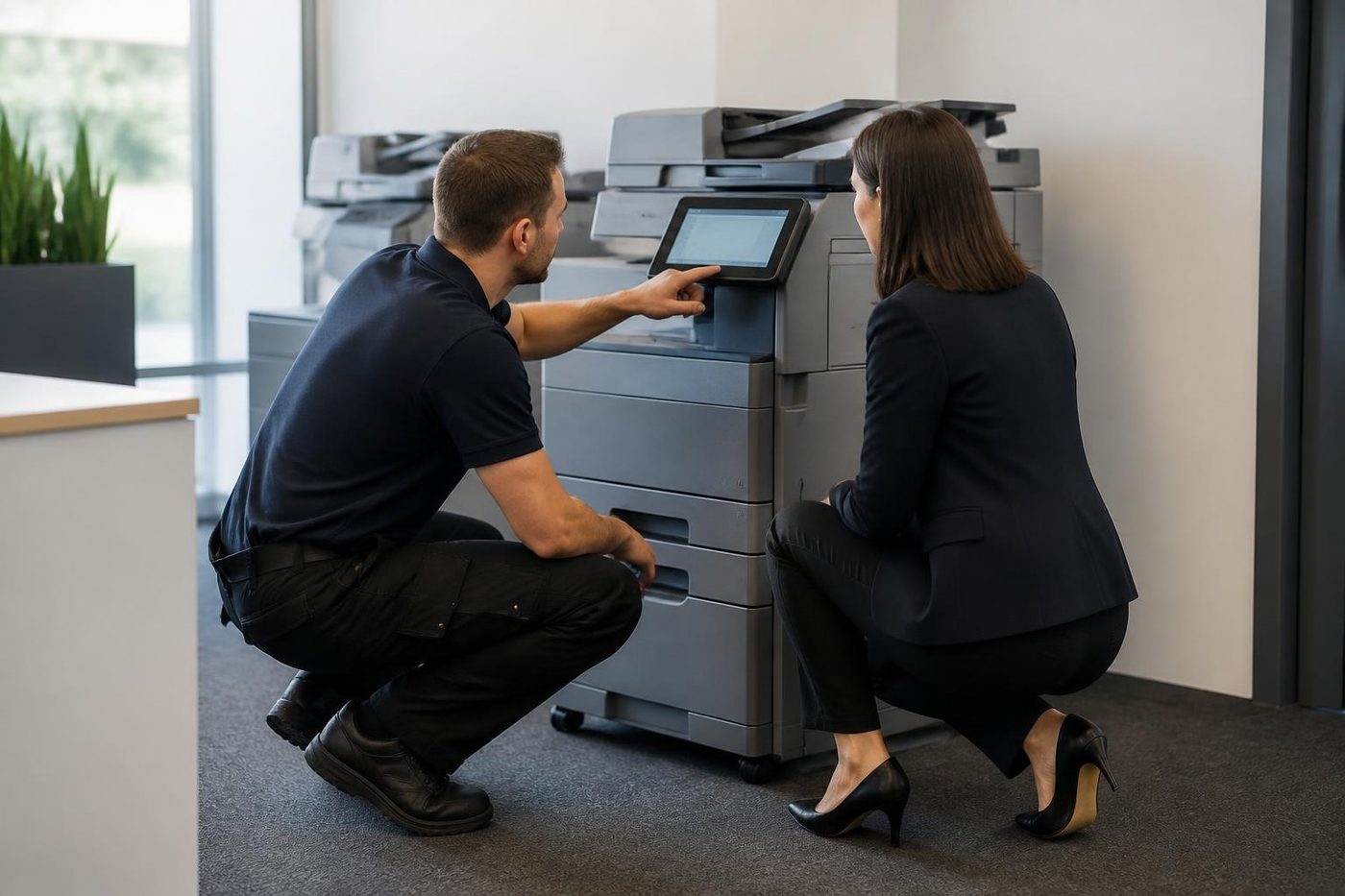
People type printer technician near me and copier technician with the same worry: will the person who turns up know my machine? The answer starts on the phone. We take the make, the model, the code on the display and the suburb, and brief the technician before the visit, so they arrive knowing what the machine is and what usually goes wrong with it.
The same technician covers printers and copiers, because the faults are cousins. A paper feed problem on an HP LaserJet and on a Kyocera TASKalfa has the same family tree. A network fault is a network fault. Where a machine sits outside what we do, such as a home inkjet, we say so on the call.
What a technician looks at first, by symptom
The table is what usually comes first for the faults that bring most calls.
| Symptom | First look | Why |
|---|---|---|
| Paper jams in the same place | Rollers, the paper path, sensors, tray guides | A worn roller or a dirty sensor repeats the jam every time |
| Black lines or a grey page | Scanner glass, drum, cleaning blade, fuser | Each leaves a different mark and the pattern shows which |
| Toner rubs off the page | The fuser, and the paper stock | Heat and pressure fix the toner, and damp paper fights them |
| A service code after a restart | The code against the model, then the area it names | A code is a pointer and not a verdict |
| Scan to email stopped | Mail server, password, address book entry | Most scan faults sit in a setting and not a part |
| Machine grinds or squeals | Gears, drive, a bearing or roller | The sound usually gets worse, so describe it early |
Trained, experienced, certified
Trained means the technician has been taught the machines and the safe way to work on them. Experienced means they have met the faults many times and know which are common. Certified means the training has been tested. Together that gives you a person who works carefully, diagnoses quickly and does not guess.
Drums are sensitive to light and fusers run hot, so those are handled with care. You also get a certain calm. A copier that has stopped a whole office is stressful, and a technician who explains what is wrong, what it involves and what it costs takes the stress down.
How the technician is briefed before the visit
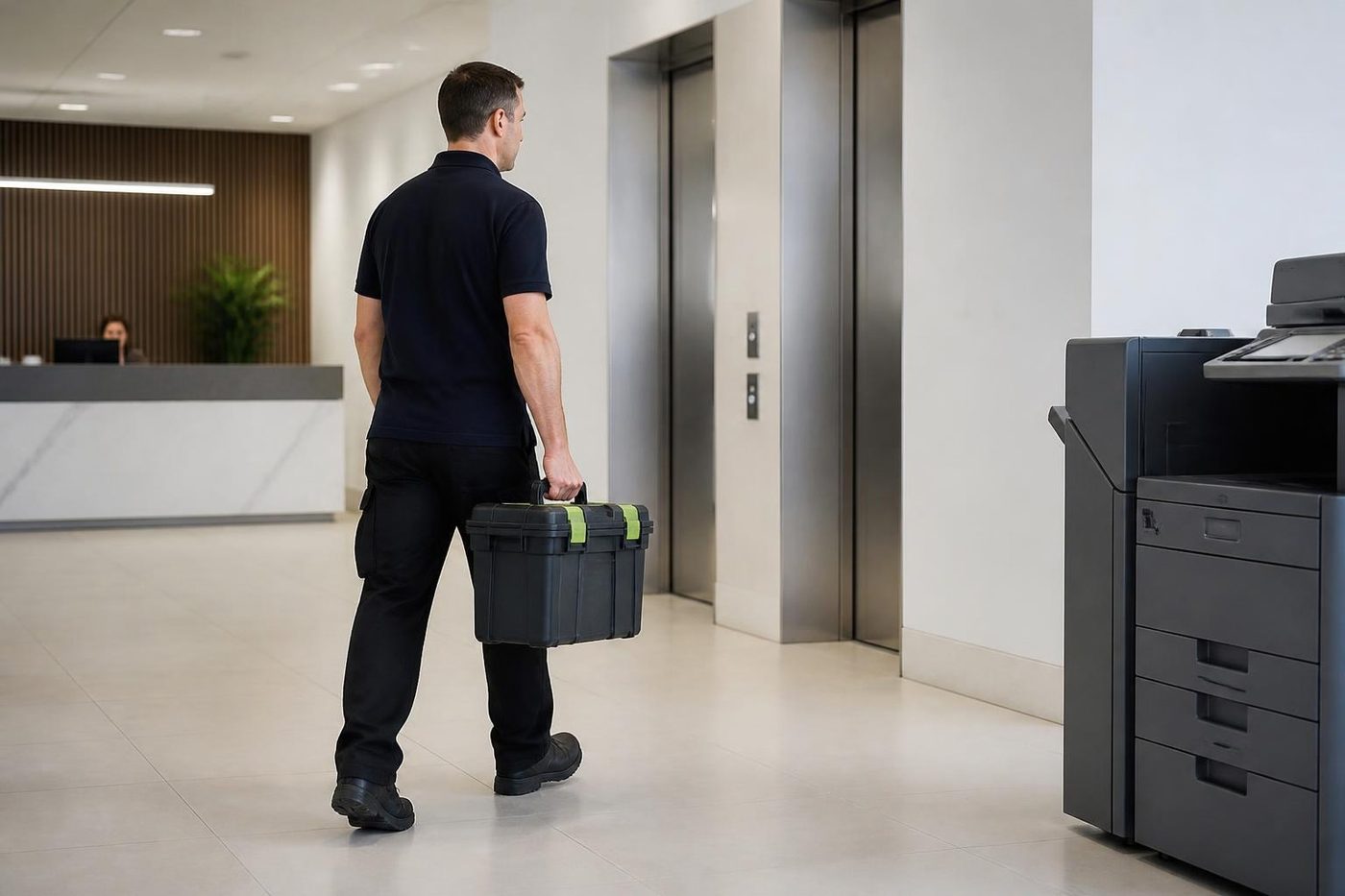
The call does not end when you put the phone down. What you tell us goes to the person who will attend: the make, the model, the code, the building and what you have already tried. They look up the usual cause on that machine, check which parts are likely to be needed and make sure those are on the van.
If the call mentions access, such as a sign in desk, a lift booking, a loading dock or an induction, that goes to the technician too. We do not state rules about particular buildings because they change. We ask you, and plan around what you tell us.
What happens before the cover comes off
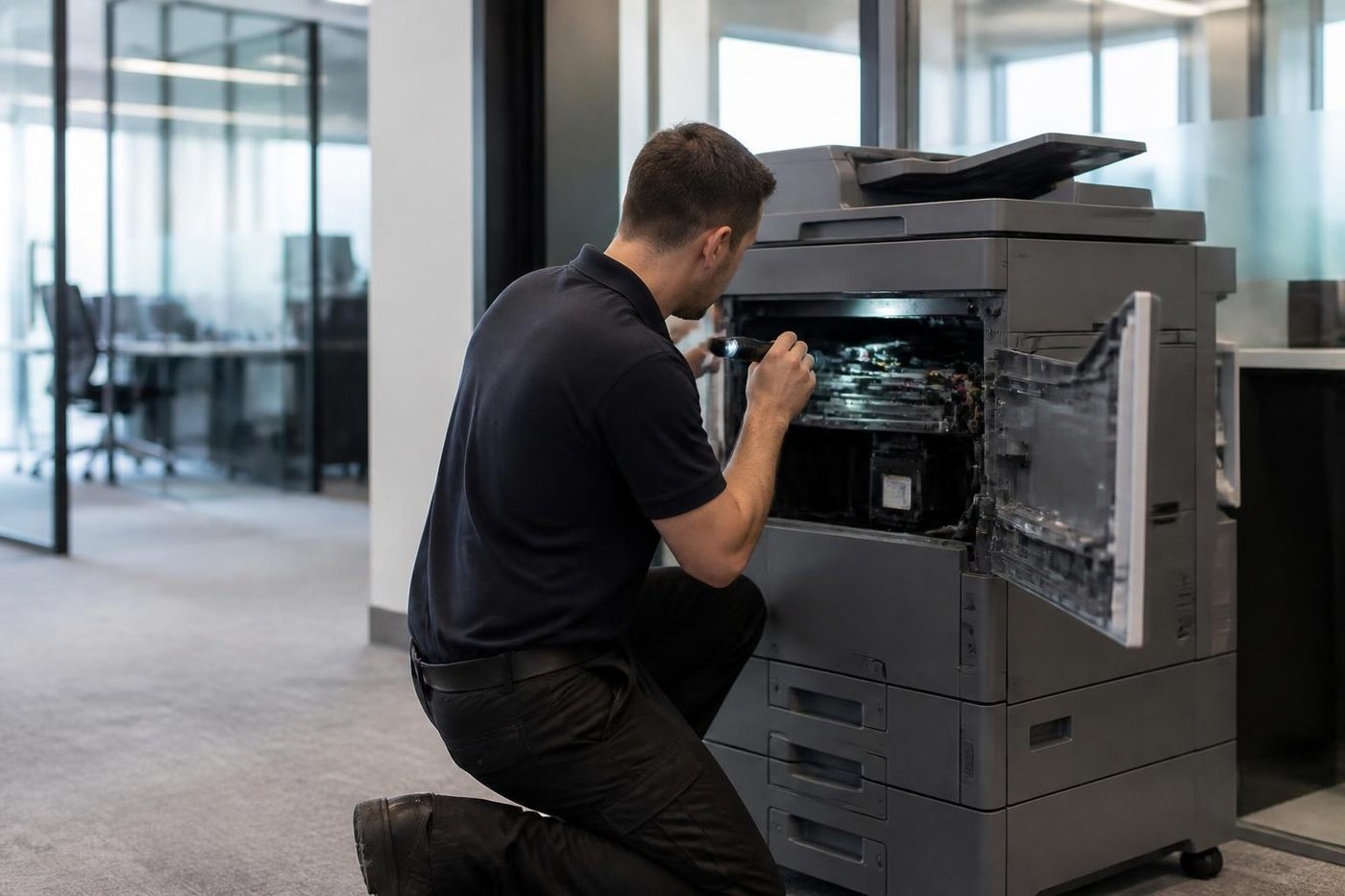
The first minutes of a visit are not spent with a screwdriver. The technician talks to whoever uses the machine, reads the message on the panel and asks to see the fault happen if it can be repeated. A fault that appears only on one tray, one job type or one workstation tells more than any code.
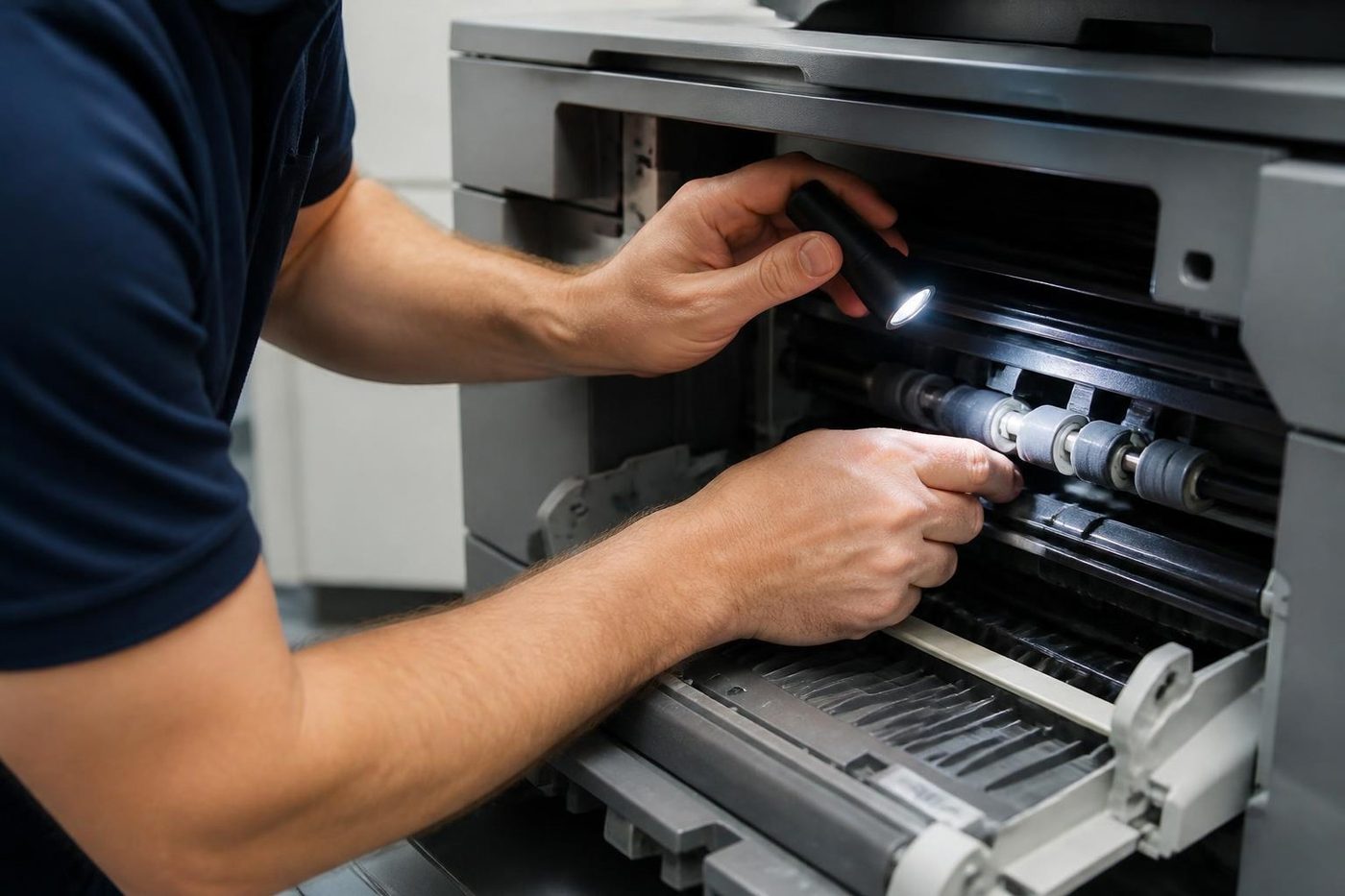
Then comes the safety step. A copier holds mains power and a fuser that stays hot long after the machine is off, and a drum can be damaged by a few seconds of bright light. The technician switches off, waits where heat is involved, covers or removes light sensitive parts correctly and only then opens the machine. It is quiet, unhurried work.
Parts we bring and parts we order
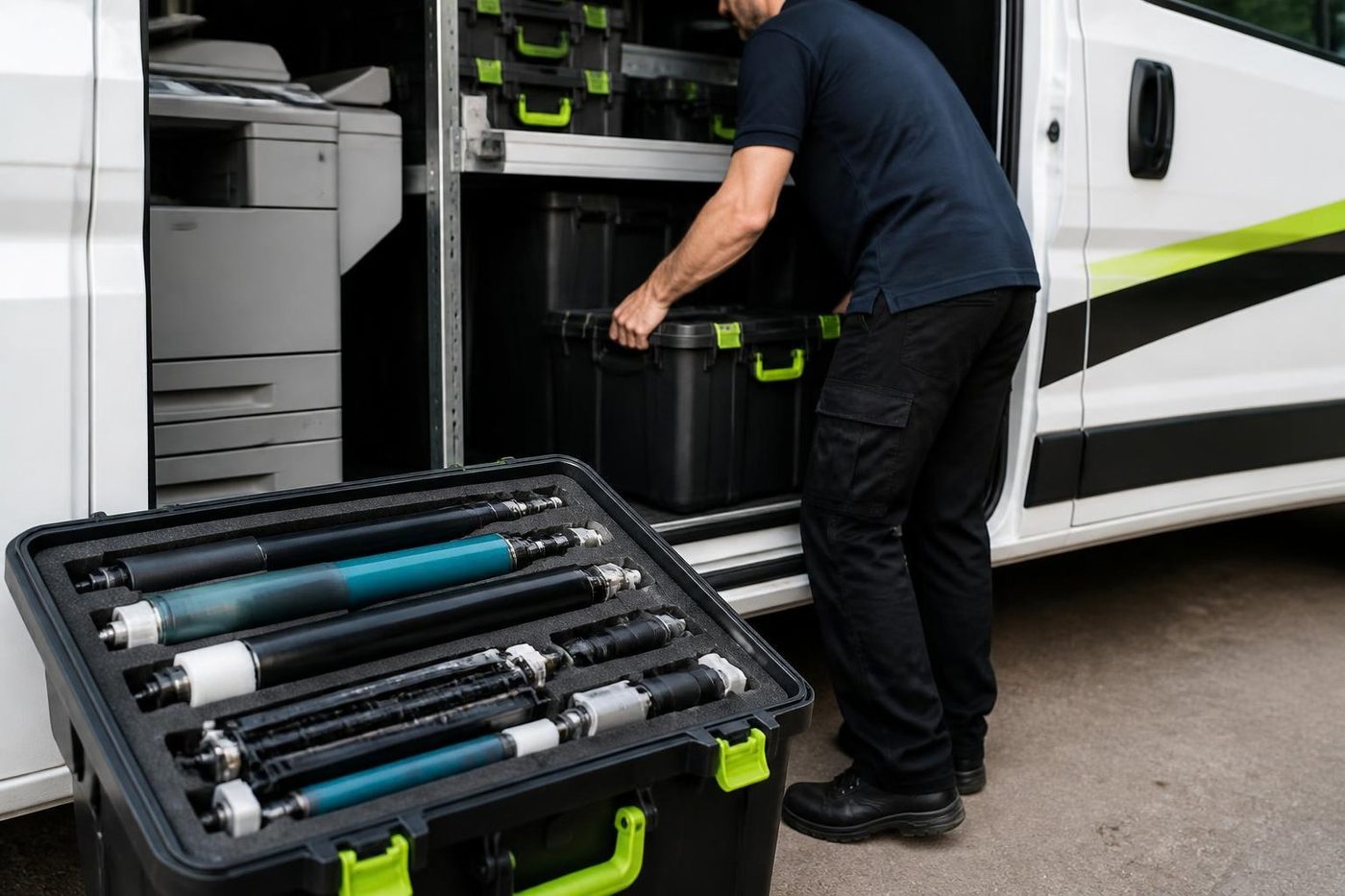
The common spare parts on the van are the wear items that fail most often on the machines we see. That is a large part of why most faults finish in one visit. It is not the whole story. Some faults need a part specific to one model, and no van can carry everything for every machine.
When that happens we say so before we leave. The technician tells you what the part is, why it is needed and what the return visit involves, and the price is agreed before anyone fits anything. The machine is left safe to use if it can be, and we say plainly if it should stay switched off.
What you can do while you wait
Some of the best help is simple. Switch the machine off and on once, and write down the code and what the display says before and after. Check that the trays are pushed in fully and that the paper is the right size and flat. Look in the obvious paper path doors for a torn corner of a sheet. Take a photo of the panel.
Then leave it. Repeated restarts can turn a recoverable fault into a stubborn one, and forcing a jammed sheet out of a fuser can damage it. If the machine smells of burning, smokes or has liquid inside, switch it off at the wall and tell us on the phone.
Offices that hold private records
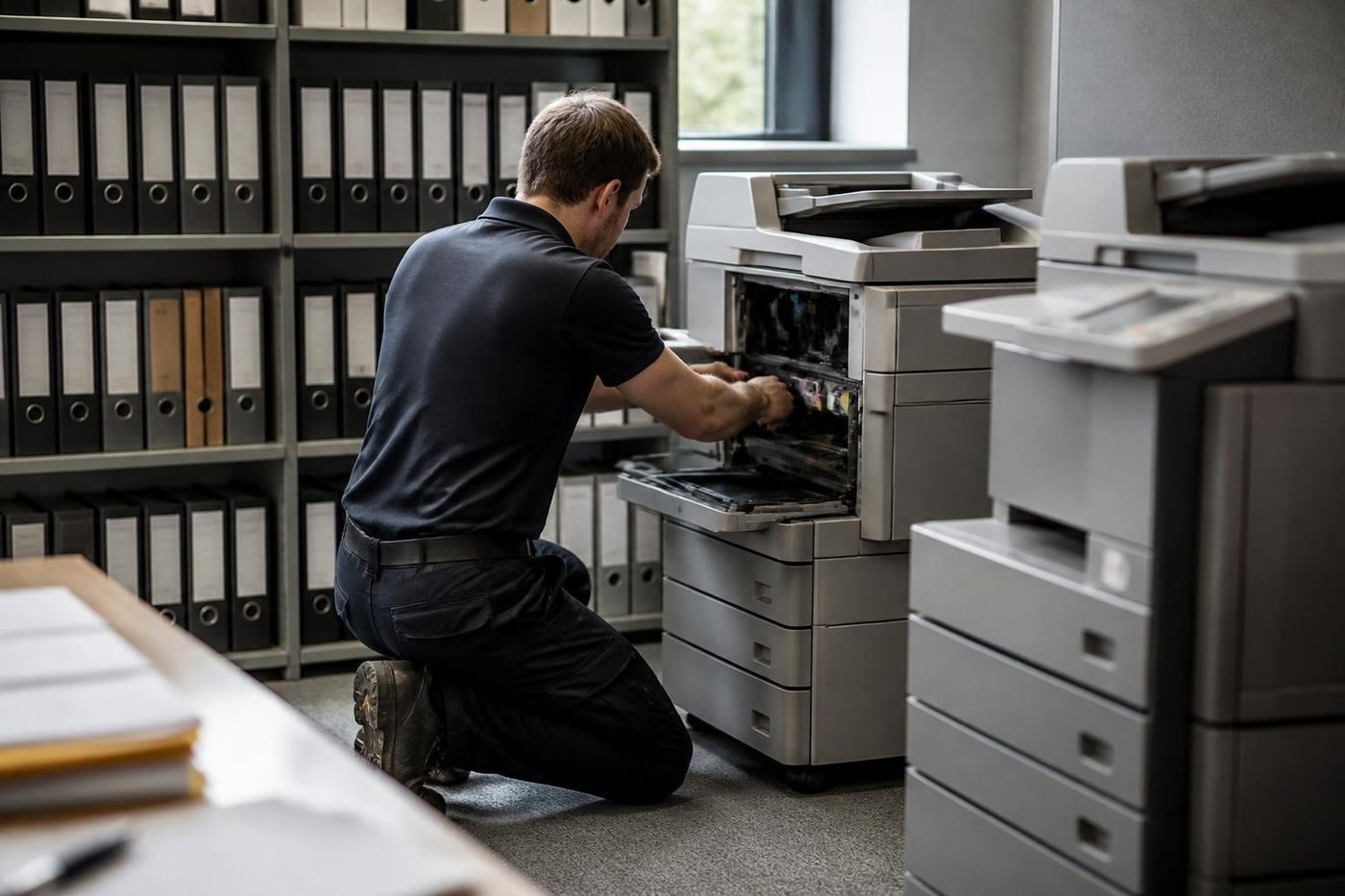
Brisbane technicians spend a lot of time in law firms, accounting practices, medical suites, schools and government offices. A copier in those rooms may hold a copy of the last job on its drive, and the technician is standing right next to it.
Ours work around your people, report to reception, stay out of the way of staff and clients and treat your documents as yours. If the repair needs a test page we use a test page. If a machine is going out of service we talk to you about its drive first.
A school, a practice, a depot
Nobody who rings is quite the same kind of office twice. A school administration block wants the machine back before the bell. A medical practice wants referrals and letters out without delay. A depot or workshop wants the label and picking slip printers going before the first truck. The technician is the same, and the priorities are different.
Tell us what the machine is used for and what would be lost if it stayed down for the day. We say honestly what we can arrange, and we do not promise a time we cannot keep.
What they will not do
A good technician knows the limits. We do not repair home printers. We do not guess at a part and charge for the experiment. We do not push a replacement when a repair will do, and we do not hide a bad repair behind a vague account of what was done. If a machine is outside what we can sensibly fix, we say so on the call.
You hear the price before the visit, and nothing is locked in by the first call. If you would rather sleep on it, do.
What happens when you ring
We take down the business name, the suburb, the machine and the fault. We ask whether the problem stops the whole office or only some people. If the fault is one we can talk through, we do that before the visit, and sometimes a call settles it. We agree the price and nothing is booked until you say so.
On the visit, the technician checks the machine and its paper path, runs test pages and tells you what was found before any part is fitted. After the repair every function you rely on is tested, including the scan destination, the finisher and the tray that caused the trouble. If the lines are busy the call is logged and returned, and the person who rings back has read your message.
A record of the machine and the call
Every call is logged, and the log earns its keep. If a fuser went in during spring and the same code is back in summer, the technician arrives knowing that. If three different people have rung about the same copier, we know it is a floor wide problem and not one person's habit.
That history also lets us give honest repair or replace advice. A machine with a steady record and one worn part is almost always worth repairing. One with a long list of parts and a new fault every month is a different conversation, and you hear it plainly.
Range across makes
Brisbane offices run a mixture. A single building can have a Toshiba on one floor, a Kyocera on another and a Ricoh in the print room. A technician who knows only one brand is of little use there. The skills carry across because the paper path, the fuser, the drum and the network behave in similar ways, and the differences are in the detail.
That is why we brief the technician on the make and model first, and why our brand pages say what we see on each. If you have a make we have not written about, ring with the model and we say honestly whether we can help.
Where our technicians work
We cover Brisbane and out to Toowoomba, west to Ipswich and the Scenic Rim edge, north through Redcliffe, Moreton Bay and Caboolture, east to the Redlands and Bribie Island, and south to the edge of the Gold Coast through Logan and Beenleigh. Same day service is available. Jobs in the outer areas are planned into the day, and the areas we service page lists the buildings and machines typical of each part of the region.
The test list after a repair
A copier is not fixed because the original symptom has gone. It is fixed when everything the office relies on has been tried. So the technician runs a test print from the tray that caused the trouble, a copy from the glass and from the document feeder, a scan to each destination in use, a duplex job and, where there is one, a stapled set through the finisher. Colour machines get a colour page, and the page is looked at in good light.
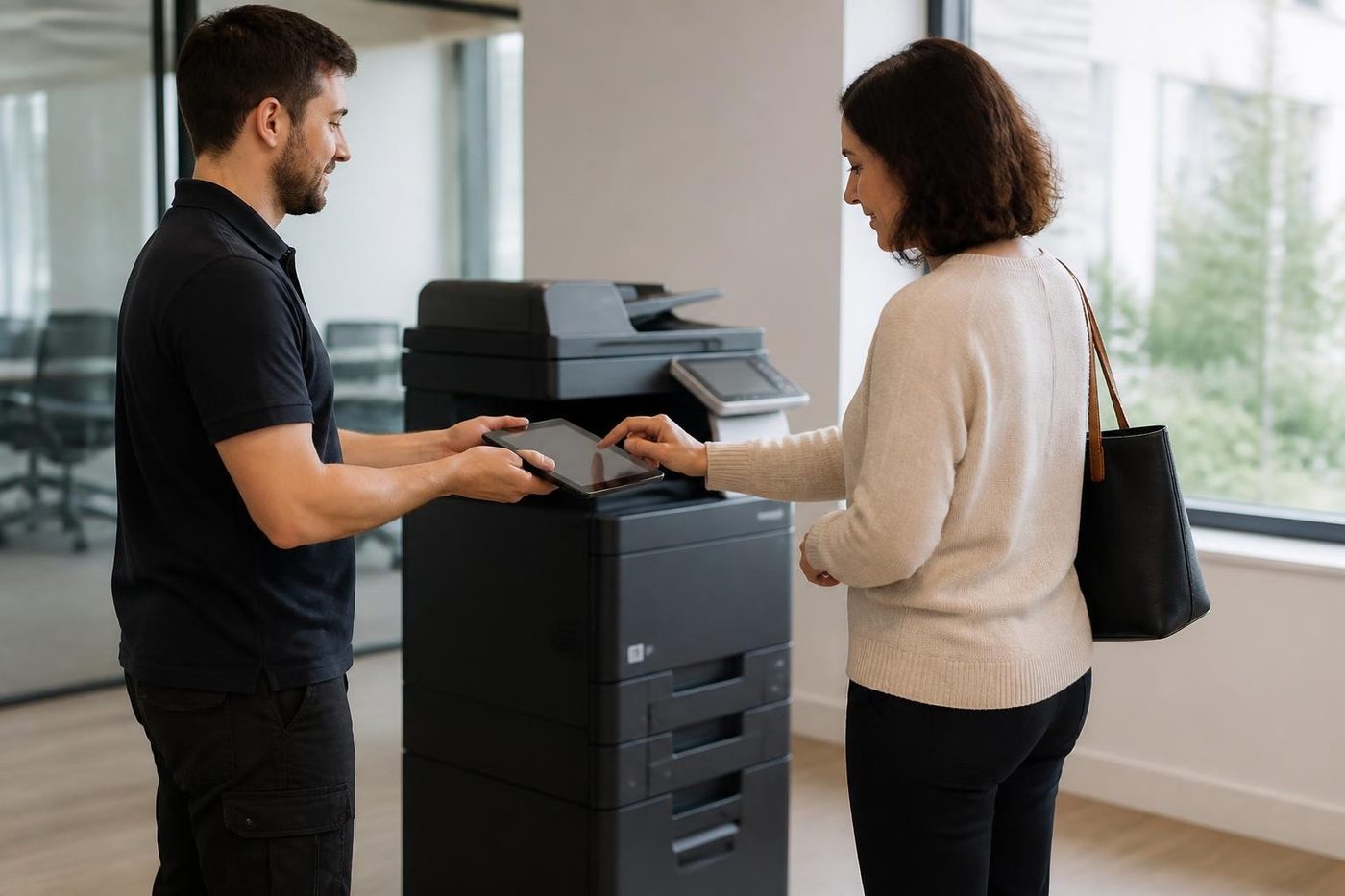
Then the technician reads out what was done and why. If a part was fitted, you hear which one. If a setting was changed, it goes on the record. Nobody leaves without the person who uses the machine having seen it work.
Questions about the building, not only the machine
We ask where the machine is and how to get to it. A Fortitude Valley loft with a narrow stair is a different visit from a CBD floor with a goods lift and a booking system, and a Wacol depot with a forklift in the doorway is different again. The technician needs to know where to park, who to report to and whether a sign in or induction is needed.
None of that is a problem. It is the sort of thing that goes wrong when it is not mentioned, so we ask, and we plan the visit round the answers.
What the service history shows
Most copiers keep a history of jams, codes and parts replaced, and the technician reads it before choosing a first move. A machine that jams at the same point every week is telling a different story from one that has jammed twice in a year. A code that came and went after a restart can still be important if it has appeared six times in a month.
We combine that history with our own call record. Between the two, the technician usually knows what to suspect before the covers come off, which is where the time saving comes from.
Colour, calibration and the day after a repair
After a fuser, drum or belt is replaced on a colour machine, the colours may need calibrating, or the first pages come out slightly off. A good technician knows this and runs the routine before leaving, and checks a test page against what the office usually prints. A repair that leaves yellow a shade too warm will be noticed by the person who prints the brochures, and it is better to catch it first.
Service agreements and planned visits
On site service is available under a service agreement as well as per call, and some offices prefer a planned visit to waiting for a failure. A planned visit means the machine is cleaned, the wearing parts are checked and anything tiring is flagged before it stops the office. We talk through the options on the phone and quote on what you want. Nothing is locked in by the first conversation.
Parts on the van
The right part has to be in the van
Anything not carried is ordered once the cause is confirmed, not before. Ordering on a hunch fills a shelf with parts that fixed nothing.
Because we also buy and sell machines we see which parts fail early on which models, and that shapes what rides in the van.
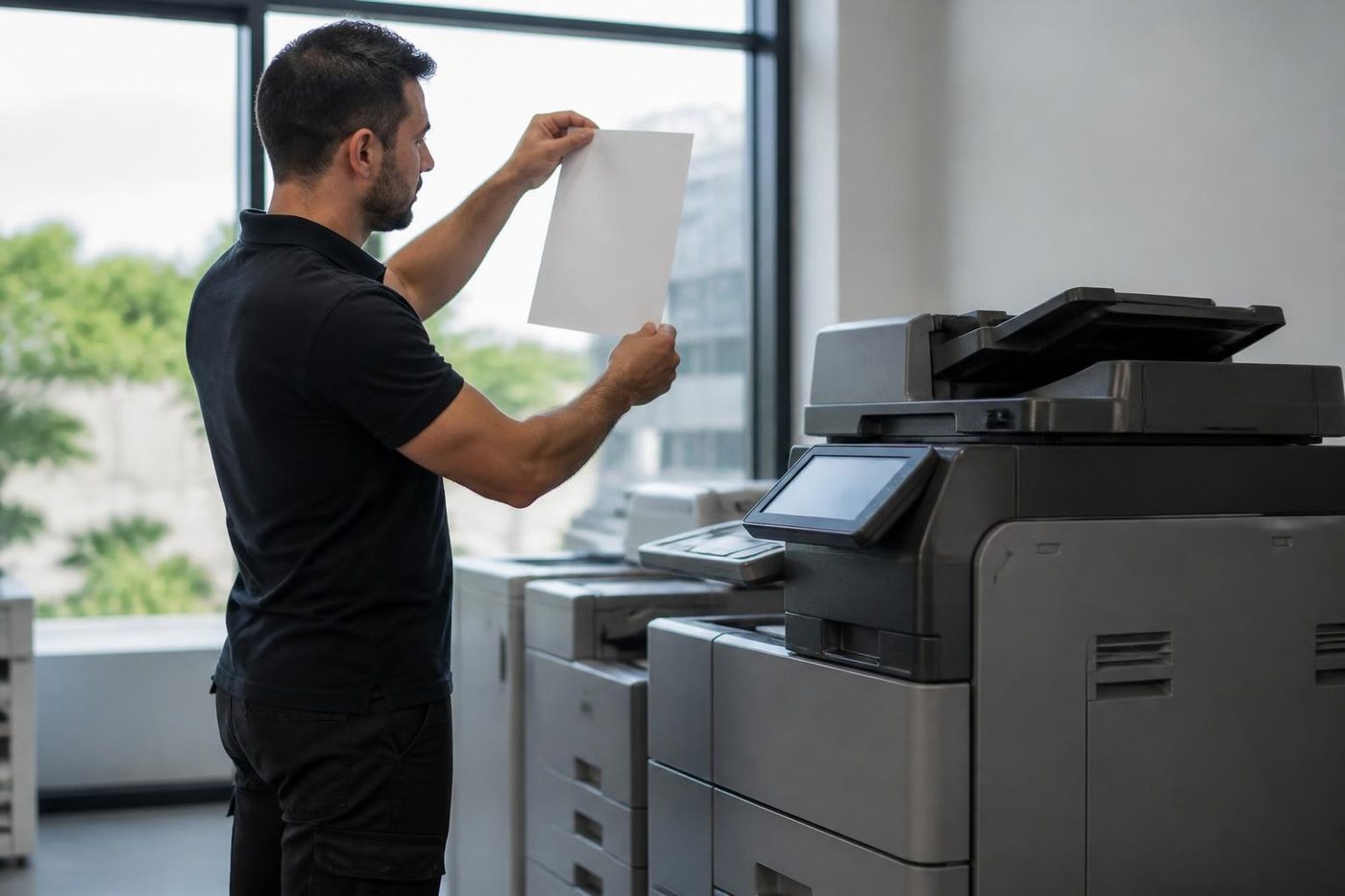
- Common spares carried. Most jobs finish without a wait.
- Ordered on proof. Not on a hunch.
- Fitted once. And warranted.
Keep reading around Brisbane
Printer and photocopier repairsCopiers and printers repaired at the desk where they broke.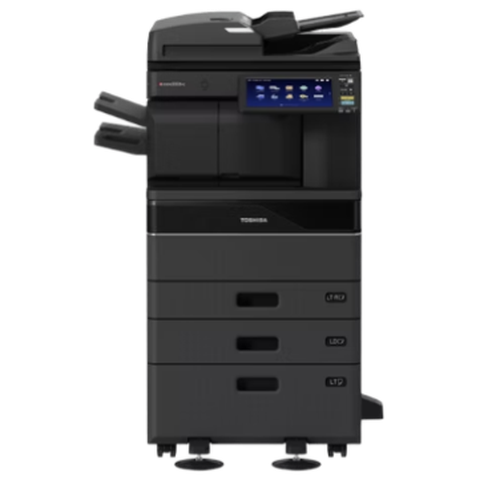 Toshiba repairse-STUDIO colour and mono copiers, fixed where they stand.
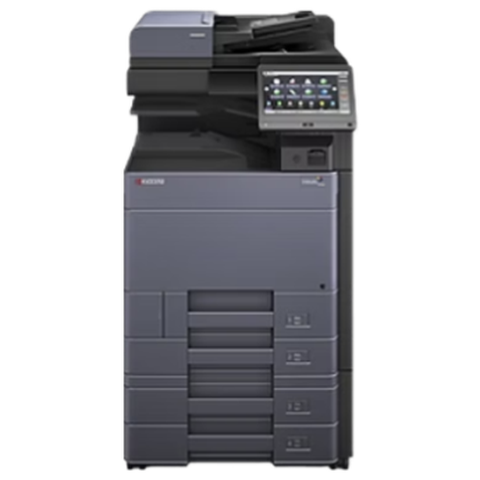 Kyocera repairsTASKalfa copiers and ECOSYS printers, repaired on site.
 Is my copier worth repairing?How we weigh repair against replacement, honestly.Photocopier paper jamsWhy it jams and what to try first.
 Copier error codesHow to read a code and what to note down.
Buy, sell and lease
Buy, sell and lease commercial copiers in Brisbane
We also sell new and refurbished commercial copiers and buy used ones. Same team, same technicians.
Shirt sleeves and parts cases

Questions people ask us on the phone
How do I find a photocopier technician in Brisbane who will come to the office?
Ring us with the make, model and fault. We brief a trained, certified technician, agree the price on the phone and book the visit once you say yes.
Do your technicians carry parts?
They carry the common spare parts. If a model specific part is needed, we say so before leaving and agree the price before the return visit.
What does trained, experienced and certified mean?
Taught the machines and the safe way to work on them, familiar with the common faults, and tested on the training.
Is there a printer technician near me for printers as well as copiers?
Yes. The same technician covers both because the faults are related. Home inkjets are outside what we do.
What should I do before the technician arrives?
Switch off and on once, note the code before and after, check the trays and paper, and photograph the panel. Then leave it.
Can you look at several machines in one visit?
Yes. Ring with the list of makes and models and we group them.
Will my documents stay private?
Technicians use test pages where they can, report to reception and treat your documents as yours. If a machine leaves service we talk to you about its drive.
Do you push replacement when a repair would do?
No. If a machine is worth repairing we say so, and if it is not we explain why.
What if the lines are busy?
The call is logged and returned by a person who has read your message.